Showing posts with label Article. Show all posts

2.12.11

From Happiness to Hell

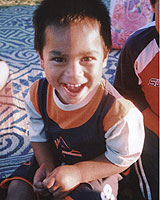
Each night Ngatikaura Ngati would climb into bed and tell his adoptive mum Kura and dad Finau that he loved them before clasping his little hands together in prayer. He'd then fall asleep in a bedroom full of family photos and toys, with pictures of Winnie the Pooh and Piglet keeping watch over him from the door. During the day the 3-year-old would play his ukulele, sing on his karaoke machine or enjoy trips to the beach or zoo with Kura and Finau who had cared for him since he was one month old. 

He was a happy child. A child who was clearly loved. 

But three weeks after his third birthday everything changed in Ngati's life. His birth mother Maine Ngati decided she wanted him back from her cousin Kura so Ngati was plucked from the only home he'd ever known. The South Auckland toddler was thrown into a completely unfamiliar environment. A new home in Otara where there were four other children, including a newborn baby. A home where there was a mattress on the floor but no blankets, and no Winnie the Pooh on the door. Ngati's new family spoke English. He had grown up speaking only Tongan so he struggled to communicate with his siblings and parents. 

The toilet-trained toddler suddenly started regularly wetting his pants and developed a weeping ulcer the size of a man's hand on his bottom. His birth mother sought no medical treatment, instead covering it with a sanitary pad. Ngati was quickly transformed from a happy and confident boy to a terrified child who would mess his pants then try to throw the evidence out of the window to avoid the beating that would always follow. 

Three short months after he moved in with his birth mother he was dead. 

Pathologists have argued in court over the exact cause of his death, but there was no dispute he was covered in injuries. Graphic photographs taken during Ngati's post-mortem showed a body that had suffered from repeated beatings. He had so many bruises that the officer investigating his death stopped counting after 50. This week, Ngati's birth mother Maine Ngati and stepfather Teusila Fa'asisila were found guilty of inflicting those injuries. Guilty of Ngati's manslaughter. 

A jury at the High Court in Auckland heard how Maine, 32, would punch Ngati in the face, strike him with a stick and whack him around the head when he was naughty. His 27-year-old stepfather beat him with whatever weapon was lying nearby. Being naughty wasn't hard. Sometimes it was messing his pants. Other times Ngati did not move fast enough or play a game the right way. Once he didn't say "yes Mum". Another time he didn't jump like a frog. 

On January 30 last year, the first of what would be the last series of beatings in Ngati's short life occurred at 10am after he did a "kaka" (faeces) in his pants. Maine later told police she was so angry she picked up a stick and beat Ngati all over his body - except his head. There she used her hand. 

After the beating Maine put her son in the bath. 

Police say it would have been obvious at this point that Ngati was injured and in pain. His left arm was so badly damaged that it had swollen to twice its normal size. But instead of seeking help for her son, Maine put him to bed. 

Later in the day, Ngati awoke on his mattress on the floor needing to go to the toilet. He tried to get up but was unable to due to his injuries, in particular his arm which had no strength. Unable to hold on Ngati wet his pants - triggering yet another beating from his mother when she found him. By that night, when his stepfather showered him, police say it would have been impossible not to have seen all of Ngati's injuries. 

"He was beaten black and blue all over," said investigating officer Detective Senior Sergeant Richard Middleton. 

"This is as bad as anything I have seen on a child or any human. The only thing that was keeping him alive [at that stage] was his young heart." 

But Ngati's young heart could only take so much and the following morning he received his final beatings - one from his mother and later one from his stepfather. 

Fa'asisila told police that Ngati had "kaka'ed" himself that morning. 

To discipline him he picked up a stick, made the boy stand with his hands on the wall and lift up his feet. He then he beat the soles of his feet. 

Police didn't believe this version of events, saying Ngati's soles were the only part of his body that weren't bruised. They, and the jury, believed the account other children gave them - the one in which Fa'asisila picked up a baseball bat and beat him with it all over his body, except his head. Physical evidence also supported this view. When police searched the Otara home they found a bat tucked out of site. It was covered in Ngati's blood. The child's blood was also found throughout the house. 

In two rooms - the living area and Ngati's bedroom - the blood had splattered so high it hit the ceiling. That was impact splatter, splatter caused by an object hitting Ngati while he was already bleeding. On the floors and walls the blood had been diluted - a sign police say that the parents had tried to wash the evidence away. 

The baseball bat beating occurred in the morning while Maine was out at a job interview. 

During the afternoon, after Maine had returned, Ngati's condition deteriorated to the point that he was drifting in and out of consciousness. At times he stopped breathing. At one point, while Maine performed CPR, Fa'asisila suggested calling for an ambulance, but she said no because "then they will find out". At 5pm Fa'asisila went to get his uncle who lived nearby. The uncle arrived and told the couple to call an ambulance immediately. On the phone, Maine told the St John operator she had beaten Ngati with a stick but showed more concern for herself than her dying son. 

"She said, 'are you going to call the police?'," said Mr Middleton. "Even at that stage she was still more worried about what was going to happen to her than what happened to Ngati." 

Ngati was rushed to Middlemore Hospital, then transferred to Starship where his adoptive mother Kura Kaufusi stayed with him till he died. Before he took his final breath Kura leaned over his swollen and distorted body and whispered in his ear for him to "go in peace". Kura and her husband Finau are still struggling with his violent death. 

"I feel like my heart's gone. My heart's been ripped out of my body because he was our heart," said Kura. "I thought I would get over it by now but I can't." 

Finau spends a lot of time at Ngati's tiny grave, keeping it clean and tidy; Kura often watches videos the couple took of his first steps, his birthdays, all his important milestones.The couple were unable to have children and didn't hesitate to take Ngati in when Maine Ngati asked them to have him when he was a baby. 

"He was a happy little boy. He called us Mummy and Daddy. He didn't know anyone else," said Kura. 

Then in November 2005 Maine wanted Ngati back despite having very little to do with him for three years. Police were told Maine Ngati was claiming a benefit for more children than were living with her and it was the threat of being caught out - and revenge against her cousin with whom she'd fought - that led to her seeking custody. 

"There's nothing that I have seen that showed she wanted Ngati back for reasons of love," said Mr Middleton. 

A distraught Kura fought for custody of Ngati. She now regrets doing it the "right way" through lawyers and wishes she had instead whisked Ngati away to a place her cousin would have never found him. 

Maybe, she says, he would have still be alive that way."I was trying to do it the right way but as a result he was dead within nine weeks." 

Kura said she tried to visit Ngati at his new home but no one would ever answer the door. She worries he never knew why he suddenly had to change houses and had no contact with the only people he'd ever known as Mum and Dad. 

"I will always feel guilty because in his mind when he was getting bashed he was probably saying 'where's my mum, where's my dad?'." 

Mr Middleton said it was not clear how often Ngati was beaten but it "certainly escalated" in the last two days of his life. 

He believes the toileting problem was evidence of the boy's state of mind while in Maine and Fa'asisila's care. 

"My thoughts on that are that they beat him so much that he lost confidence and he wet and pooed himself because he got so many beatings." 

Mr Middleton said Ngati's final hours would have been excruciating. 

When the pathologist cut open his swollen arm they found all the tissue had died from the beating he had suffered. There was a subdural haematoma which was 5-10 days old as well as fresher trauma to the head from the recent beatings. There was also an unusual patterning with bits of skin missing from his arm, wrist and inside thigh - those injuries are from a weapon police have been unable to find. They say Maine Ngati and Fa'asisila got rid of the weapon - more evidence that the couple knew what they were doing was wrong. 

Kura and her husband did not see Ngati after he moved and it is not clear if other relatives were aware of the abuse the little boy suffered - they certainly denied any knowledge of it while giving evidence in court. Ngati's siblings testified and are now being cared for by others. Mr Middleton said it was possible the beatings never occurred in the presence of other adults, but it was hard to believe no one noticed anything wrong. On the morning of Ngati's death one of Maine's relative said she gave him a high-five during breakfast and everything seemed fine. This would have been after he suffered two serious beatings the day before, one so bad that he was unable to use his arm. 

"It's impossible to think he was 'quite happy' the morning he died." 

Mr Middleton believes it may have been a case of other relatives "wilfully ignoring" what was going on. "The other family members at best didn't want to know. 

"In some families abuse of this nature is commonplace and every now and then it turns to tragedy as it has in this case. The answer is never hit your kids." 

Kura agrees and says it sickens her to see what happened to Ngati. She no longer considers Maine a relative and says the only blessing in Ngati's death is that he is now "away from the devils."
"I'm glad they got guilty ... That will be justice for my little man." 

* Maine and Fa'asisila were charged with murder. They were found not guilty of murder but guilty of manslaughter. They were also found guilty of a separate charge of manslaughter for failing to provide medical care which could have saved Ngati's life and for wilful ill-treatment of a child. They will be sentenced next month.

source : nzherald.co.nz

15.11.11

Teach Respect to Children - United Against Prejudice and Discrimination


Every child has the right to be safe and free from prejudice and discrimination. Sometimes, however, children themselves unknowingly discriminate against other children basing their prejudices on race, religion, social class, colour, gender, background, obesity, disability, HIV status or other personal characteristics.

Name calling, poking fun, mimicry or not playing with someone because she or he is different are some of the ways children discriminate against their peers. Such behaviors can lead to stigma and social exclusion for many children. Worse, it can also result in abuse, harassment and bullying.


Non-discrimination is crucial to secure a child’s fundamental rights and freedoms. The Convention on the Rights of the Child, a legal treaty which Malaysia ratified in 1995, upholds that no child should be the victim of discriminatory acts; and that children are equally responsible for respecting these rights.

As a society, we must help our children develop positive attitudes. The responsibility to protect children from all forms of discrimination, prejudice and abuse, including bullying, is the responsibility of parents, teachers, and other adults in the community who are in contact with children.

Teach Respect, in honour of Universal Children’s Day on 20 November, aims to empower adults and children alike to promote fairness, empathy and mutual respect in their communities.

You can help spread this message of respect and acceptance in several ways. In addition to viewing and sharing Unicef Public Service Announcements, you can also join the discussions on Facebook between 14 and 30 November and give your views on bullying, discrimination, tolerance and respect.

Join Unicef. Help create a better world for all children.

14.10.11

Review : Angry Birds - Knock On Wood Game


It happens all the time. A company comes up with a great idea that actually sells, and then the next thing you know, they’re expanding their new-found “brand” to encompass every other gadget imaginable to take full advantage of their brilliant initial concept. Such is the case with the Angry Birds market. While it started from an explosive mobile app featuring a cynical yet appealing flock of angry birds, there are numerous other products on the market today attempting to capitalize on the flying icons from stuffed animals to T-shirts, and apparently, now board games as well. The Angry Birds premiere board game called Angry Birds: Knock on Wood is designed for kids ages five and older and promises a real-life replication of the wildly popular mobile app.

Fun and Simple Concept
Unlike a lot of other games (even the ones targeted towards kids), this game is not hard to play. The rules are pretty simple: you pick a card, follow the instructions to build a structure, and your opponent tries to knock it down by using the included slingshot to shoot the birds at your masterpiece. For some reason, lots of youngsters (and quite a few adults as well) find this kind of destruction incredibly entertaining. Plus, little kids can play it too since no reading is required and the concept is fairly (ok, really) simple.

Educational
Yes, you heard that right. This board game based on a seemingly pointless but wildly entertaining video game app has some redeeming educational qualities. No, it won’t teach your kid to spell or perform calculations in his head, but it will help him develop  the fine motor skills and coordination necessary to build the required structures, plus his imagination is a bit more engaged that it would be were he simply playing the game on a cell phone or computer.


The Pros

  • The rules are simple, easy to explain to younger children, and you don’t have to know how to read to figure things out, so that’s also great for little ones.
  • Games with catapults are always a hit around here!
  • I love, love, love Angry Birds anything!
  • Set up was easy – within a few minutes – and they have been playing with it ever since. This one is a keeper!
  • Fun for the whole family.
  • This is the BEST investment in fun I have made in a LONG time!!
The Cons
  • Requires coordination and patience…
  • I wanted to love this game, but the plastic pieces are so flimsy and light.
  • Most of the time, you spend a long time building the structure only to miss it completely with the birds.
The bottom line is that if your kid loves the original Angry Birds app or computer game, he’s going to love this game as well. And chances are, even if your little one doesn’t know what Angry Birds is yet, he’s still going to love this game. After all, what kid doesn’t like building things and then destroying them? Although you may balk at the millions of pieces or lack of durability, your kid is not going to care one iota about those things. So, your decision making really comes down to this - are you willing to make a little sacrifice to see your kid smile as he engages in technology-free fun? Of course you are!

13.10.11

Computer Simulation of the Universe’s Complete 14-Billion-Year Evolution

The Bolshoi Simulation is a massive, incredibly detailed model of everything, providing a comprehensive simulation of the universe's 14 billion year history. Scientists are now exploring the simulation, and we've got some of the most breathtaking results of their efforts.

The image up top is just one many stunning images to come out of this new simulation. This particular image shows how gas is distributed in the universe's most massive cluster of galaxies, which is called Cluster 001. Scientists are using this new simulation to create stunning images and video that help reveal many of the universe's most complex mysteries...and help us remember how beautiful the cosmos really is.

The Bolshoi supercomputers create this simulation of the large-scale structure of the universe by first examining the data from NASA's WMAP explorer, which maps out the cosmic microwave background radiation. Since this radiation is the light left over from the Big Bang, it's the most ancient data in the universe, and from those starting conditions the supercomputer can use existing theoretical knowledge to simulate the evolution of different parts of the universe. Because the supercomputer's results match up almost perfectly with what we actually can observe of the history of the cosmos, astronomers are confident in its accuracy as a proxy for the actual universe.

Dark matter is a key part of the simulation - it would have to be, considering it accounts for 25% of everything in the universe and about 80% of all matter. The simulation relies on a theoretical model known as the Lambda Cold Dark Matter model, which says that gravity began pulling bits of dark matter together into clumps shortly after the Big Bang. These clumps became larger and larger over time, attracting regular matter to form galaxies around them. Even though we still don't know exactly what dark matter is, it is the primary driver of the evolution of the cosmic structure.

The Bolshoi supercomputers simulated one representative section of the universe, measuring one billion cubic light-years - by comparison, the Milky Way is only about 100,000 light-years long, and our galactic cluster, the predictably named Local Group, is still just 10 million light-years in diameter. The simulation covered a massive chunk of the universe, and it simulated the interactions of 8.6 billion dark matter particles. That task took one of the world's faster supercomputers over six million CPU-hours to complete. The results were more than worth all that effort, as you can see from some of the awesome videos below.


This video also features accompanying music, "Her Knees Deep in My Mind" by Ray Lynch.

This next video gives some idea of how well the Bolshoi simulation matches the observed universe. The video compares data from the supercomputer with the distribution of galaxies observed in the Sloan Digital Sky Survey, or SDSS. What's particularly cool is that, while the real observations and the simulated data match, the information from the supercomputer also includes dark matter halos that we can't detect directly. This suggests the dark matter model is a good fit for explaining the evolution of the universe. It's not proof of dark matter, but it's a cool indication that we're probably on the right track.


Video below examines whether our galaxy is somehow unusual. Based on both the SDSS and the Bolshoi simulation, it does appear the Milky Way is somewhat unique, at least in terms of the company it keeps. The Milky Way has two satellite galaxies known as the Magellanic Clouds. It turns out that only about 5% of galaxies like ours have two satellites galaxies, meaning we fall into a fairly small minority.


Speaking of the Magellanic Clouds, this next video uses the Bolshoi simulation to determine how the Milky Way and its galactic neighbors might have formed. Using all the available data on how dark matter halos work, this video presents one possible scenario for the evolution of our galactic neighborhood. Among other things, the video reveals that the Magellanic Clouds may only have shown up recently, cosmically speaking.


Finally, if you've got an extra half-hour to spare and you really want to dive in deeper with all this, check out this lecture by Joel Primack at the 2011 Santa Cruz Galaxy Workshop, in which he explains how the entire simulation works.

For more information, check out the Bolshoi Cosmological Simulations website. For an overview of related academic papers, go here. Additional videos here and additional images here. Top image by Kristin Riebe, PMviewe. Videos provided by Risa Wechsler.

1.10.11

Archaeologists Discovered Prehistoric Finger Painting

Archaeologists have uncovered cave art providing evidence that hunter-gatherer children may have attended a form of prehistoric pre-school. Researchers have revealed that 13,000 years ago, prehistoric children created art in caves with the help of their parents. A conference on the Archaeology of Childhood at Cambridge University, starting today, will reveal the latest research into art made by children as young as three in one of the most famous prehistoric decorated caves in France.


Archaeologist Jess Cooney said: 'We don't know why people made them. We can make guesses like they were for initiation rituals, for training of some kind, or simply something to do on a rainy day'


Archaelogists found evidence of thousands of lines - a simple form of art or decoration known as finger flutings - made by people running their hands down the soft surfaces of the walls and roofs of the many galleries and passages that make up the complex.

Some of the drawings by children were found high up on walls, meaning they could have been helped up there under the watchful eye of an adult.

Read More : Daily Mail

10.9.11

What Is Right Brain Training... Where Did It Begin?


Curious about how the right and left brain were first recognized? In the late 1960's, an unexpected discovery lay in store for Drs. Robert Ornstein and Roger Sperry of the California Institute of Technology. They set out to see what would happen if the corpus callosum -- a wide band of nerve fibers which connect the left and right hemisphere -- was severed.

What they found astonished the medical world. Their "split-brain" research showed that each hemisphere of the brain continued to function independently in distinctly different ways. The left side of the brain processes linear, concrete factual information and is key in language and logic, while the right side of the brain processes random, creative, intuitive, multi-sensorial images. Subsequent studies by those who have carried on their work have revealed that each hemisphere contains some of the abilities of the "other side." When an ability that is linked to one hemisphere is developed or activated, the entire brain is activated, and all areas of mental performance improve. Each side of the brain exhibits certain characteristics :


The activation of the whole brain leads to the ability for all to achieve their highest potential! To understand how to maximize and activate the whole brain, we concentrate our efforts on the right hemisphere of the cortex...the "imaging brain."

13.7.11

Recycling Facts


These recycling facts have been compiled from various sources including the National Recycling Coalition, the Environmental Protection Agency, and Earth911.org. While I make every effort to provide accurate information, I make no warranty or guarantee that the facts presented here are exact. 

We welcome all polite corrections to our information. Please also feel free to contact us if you have additional recycling facts to share. Links to our blog are always welcome. Feel free to use any information listed on our site for your own not for profit educational purposes. A link to our site as your source is appreciated.

Cool Recycling Facts :

- Recycling one aluminum can saves enough energy to run a TV for three hours - or the equivalent of a half a gallon of gasoline.

- More aluminum goes into beverage cans than any other product.

- An aluminum can that is thrown away will still be a can 500 years from now!

- Rainforests are being cut down at the rate of 100 acres per minute!

- If all our newspaper was recycled, we could save about 250,000,000 trees each year!

- Each ton (2000 pounds) of recycled paper can save 17 trees, 380 gallons of oil, three cubic yards of landfill space, 4000 kilowatts of energy, and 7000 gallons of water. This represents a 64% energy savings, a 58% water savings, and 60 pounds less of air pollution!

- The construction costs of a paper mill designed to use waste paper is 50 to 80% less than the cost of a mill using new pulp.

- Plastic bags and other plastic garbage thrown into the ocean kill as many as 1,000,000 sea creatures every year!

- Recycling plastic saves twice as much energy as burning it in an incinerator.

- A modern glass bottle would take 4000 years or more to decompose -- and even longer if it's in the landfill.

- Motor oil never wears out, it just gets dirty. Oil can be recycled, re-refined and used again, reducing our reliance on imported oil.

10.7.11

Kids' Menu Ideas

It's no secret that many kids are picky eaters, so it can be a big challenge to come up with healthy and suitable menu options that they'll agree to eat or even try. Parents and caregivers can help set an example for kids by readily trying new foods, but there are also a number of other strategies to employ that might spur original ideas and get kids to chow down.Nutrition

Pay some attention to nutrition when thinking up new menu ideas. Not every meal has to be completely balanced, but including variety is a healthy gesture and may entice kids to eat. Children need the same types of nutrients as adults, but their calorie requirements are slightly different. According to MayoClinic.com, toddlers need about 1,200 calories per day, kids up to age 8 need about 1,600 and kids from 9 to 13 need 2,200 or more. Include a mixture of proteins, fats and carbohydrates at each meal.
Proteins

Carbohydrates


Cookbooks
Cookbooks can be a valuable menu planning resource. Even if they're not geared toward kids, recipe books help inspire new ideas and make it easy to tweak existing meals. Additionally, making food for kids at home is often healthier than eating out or grabbing processed, packaged meals at the store. HelpGuide.org notes that coming up with your own menu ideas and modifying recipes from cookbooks gives you control over what's on your kids' plates and can help bring the whole family closer together.

Sample Menus
Start by modifying recipes that kids already like or preparing related foods. Try mixing steamed broccoli or carrots in with mac and cheese, for example, or making pizza with shredded vegetables, pesto sauce and a sprinkling of Parmesan cheese. For lunch, pack soups or wholesome stews in a thermos. At breakfast, offer whole-grain pancakes or waffles, with fresh fruit on top instead of syrup.


Creativity
A healthy amount of creativity can go a long way in menu planning for kids. The website for "Cooking Light" magazine suggests changing the presentation of dishes you normally serve by providing them in bite-sized pieces as "mini meals." Try the site's suggestions of muffin-sized frittatas, sliders and wraps cut into pinwheels. Making face shapes or other pictures with food on a plate is another worthwhile idea. Finally, get creative with serving times. Offering breakfast for dinner or pizza in the morning is a way to get kids excited about whatever happens to be on the menu.

Tips
Get kids involved with mealtime by asking them for menu ideas. Go to the farmers' market or grocery store as a family and have the kids pick out fruits, vegetables or grains that look good to them, as MayoClinic.com suggests. Research recipes together or come up with new ideas by brainstorming. Invite the kids to help cook, set the table and clean up after the meal. All of those gestures will help inspire a deeper connection to the food on the plate and will get kids thinking more about their own menu ideas.

3.1.11

What is play?


Play has different meanings for different people. Some say that to define play is virtually impossible What do you think play is?
  
• Attunement play

When an infant makes eye contact with her mother, each experiences a spontaneous surge of emotion (joy). The baby responds with a radiant smile, the mother with her own smile and rhythmic vocalizations (baby talk).  This is the grounding base of the state-of-play. It is known, through EEG and other imaging technologies, that the right cerebral cortex, which organizes emotional control is “attuned” in both infant and mother.

• Body Play & Movement

If you don’t understand human movement, you won’t really understand yourself or play. If you do, you will reap the benefits of play in your body, personal life and work situations.  Learning about self movement structures an individual’s knowledge of the world - it is a way of knowing, and we actually, through movement and play, think in motion. For example the play-driven movement of leaping upward is a lesson about gravity as well as one’s body. And it lights up the brain and fosters learning. Innovation, flexibility, adaptability, resilience, have their roots in movement. The play driven pleasures associated with exploratory body movements, rhythmic early speech (moving vocal cords), loco-motor and rotational activity - are done for their own sake; pleasurable, and intrinsically playful. They sculpt the brain, and ready the player for the unexpected and unusual.

• Object Play

Along with other special patterns of play, the curiosity about and playing  with “objects” is a pervasive innately fun pattern of play, and creates its own “states” of playfulness.  Early on, toys take on highly personalized characteristics, and as skills in manipulating objects (i.e., banging on pans, skipping rocks, etc.) develop, the richer become the circuits in the brain. Hands playing with all types of objects help brains develop beyond strictly manipulative skills, with play as the driver of this development. The correlation of effective adult problem solving and earlier encouragement of and facility in manipulating objects has been established. The science of progressively more complex object play and its relation to overall competency has sparked research interest in corporate “work readiness”, in that a deficiency in fixing things by hand during one's youth may well mean deficiencies in complex problem solving in challenging work settings as an adult. To be a good research engineer, for example may mean that the times spent in high school fixing cars or building airplane models are as important as getting an advanced degree, particularly if the engineer is also expected to function as an innovative problem solver.

• Social Play

From the simplest romp and wrestling of young animals to the most jocular and complex banter of close friends, social play is a key aspect of play behavior. The science of social play is complex, but can be studied selectively.
Related Posts Plugin for WordPress, Blogger...